
The Next Act: Chicago's Early-Stage Venture Ecosystem
Updated: Aug 6
The Next Act: Chicago's Early-Stage Venture Ecosystem
I was born and raised here in Chicago. I love the city & I love working at startups. I spent the last 7 years working in strategy and ops, as well as, building partner networks at startup businesses. While actively looking for opportunities to work in the startup space, I found myself having to go to SF, Austin, and even Denver to find the roles I wanted. This experience raised the question: why is this and what can we do about it?
The situation is well documented. Chicago captures a disproportionately small share of U.S. venture capital [1.2% of all venture dollars according to Carta] with the concentration of investments occurring in coastal cities. Carta's most recent rankings ranked Chicago as a 4th tier city, below Denver, Washington D.C., and Miami, cities Chicago used to be well ahead of.
Now, Chicago has been here before. Many of you know the term "Second City." It's the name of a beloved comedy institution on Wells Street. What some may not know, is that this title began as an insult. In 1952 a sensational article in The New Yorker used the phrase to mock Chicago's culture, theater, and nightlife as permanently second-rate. Seven years later, a group of improvisers from UChicago took that insult and built the most influential comedy institution in America. They didn't do it by copying Broadway. They pioneered a new method, and it paid off — producing generational talent including Tina Fey, Stephen Colbert, Amy Poehler, Deon Cole, and dozens more. There's something for us to learn from how they did it.
As part of understanding how Chicago got here, I spoke with VCs both based here and elsewhere about the city's positioning. A few threads kept resurfacing across my conversations: a shallow, risk-averse local LP base; a lack of density that pushes founders to the coasts to raise; exits with coastal-backed cap tables, which means the proceeds recycle there, not here; and without density, there's no flywheel — and the opportunity is lost.
We saw this play out with Rise Reforming. Rise had every ingredient to succeed here: three University of Chicago graduates who joined the Illinois Institute of Technology's incubator and raised a $650,000 pre-seed round. They were well positioned to raise their next in Chicago. They didn't get the checks they needed. Only after Y Combinator accepted them did Chicago investors start angling for a seat at a table they could have hosted themselves.
Let's look at what took Second City from an insult to a success story. There were two defining strategies that can be applied to the Venture Capital and Startup ecosystem in Chicago today: ‘reject the set play’ and ‘build an ensemble cast’.
Reject the Set Play
Viola Spolin — affectionately known as the mother of improv — pushed the Second City ensemble to abandon the script and react to the room instead. Chicago's early-stage investors have spent too long doing the opposite and are known among founders to be more risk-averse than coastal investors - investing in the tried-and-true versus industry-breaking innovation. Chicago investors could move earlier on emerging trends, based on their own conviction.
What Chicago is not short on is industry. While most regional economies cluster around a single dominant sector, Chicago runs on a hybrid base: finance and fintech, food innovation and manufacturing, transportation and logistics, and healthcare, life sciences, and biotech. What Chicago can win is the application of AI inside the industries it already dominates. Healthcare, logistics, financial infrastructure, manufacturing — these are sectors where Chicago has decades of operating depth, Fortune 500 customer relationships, and proprietary data no SF founder can replicate by raising a bigger check.
This is where Chicago should be putting more capital towards: leveraging the structural advantage of skilled operators and industry leaders already here. Moving first, and leading deals. No more squeezing onto the edge of the cap table the way we did with Rise Reforming.
Build an Ensemble Cast
Second City’s 2nd strategy was to ‘build an ensemble cast’. Second City never relied on headliners. No single performer carried the show — the ensemble did.
Today's emerging managers are competing from behind for the same shrinking pool of institutional LP attention. PitchBook reported Six firms alone raised 76.2% of every dollar committed to new funds that quarter [Pitchbook]. It’s not surprising then that the median size of new venture funds dropped to $15.3 million, down from $25 million [Pitchbook]. PitchBook's own analysts describe the fundraising market as practically closed to most emerging managers.
That's especially hard on Chicago, because the city’s funds have tended to be more concentrated to a few LPs when compared to coastal peers. On the coasts, a common Fund I often draws on a wide base of individual LPs — sometimes 100 operators writing checks in the $25,000 to $100,000 range, rather than a only handful of institutions or family offices.
So, instead of competing harder for capital that's increasingly going elsewhere, Chicago-based emerging managers should focus on building their own ensembles. Chicago is a global economic powerhouse with a genuinely diversified industry base — home to 35 Fortune 500 headquarters. Across every one of those industries sits a large, experienced class of operators with capital and domain expertise, just waiting to be organized into an emerging fund’s LP base.
A Different Kind of Proximity
Conversations about ecosystem-building always turn to proximity, and there's real work being done to build it — Portal Innovations, built by Pat and John Flavin, whose Fulton Labs portfolio is nearly half Chicago-based, and Density Collective, built by Eric Mills and Danny Goodman. But proximity has more than one definition. A healthcare executive who has run one of Chicago's hospital systems for twenty years has a different, equally valuable form of proximity: proximity to the actual problem a healthcare AI startup is trying to solve, proximity to the patients and clinicians who will use the product, proximity to the procurement process that decides whether it ever gets adopted. For an emerging manager raising in this environment, that is the proximity worth building around, starting today.
How? Three key steps:
1) Build anchor relationships in a vertical
2) Stand up education to engage operators
3) Organize more sophisticated administration
This model is certainly more operationally demanding but the trade-off is that your LP roster itself becomes part of the fund's offering. The good news is this isn't theoretical, we have models to learn from and industry partners to build with.
FireStarter Fund is the earliest working template: a member-led venture fund built directly from a network of successful Chicago founders and operators, blending an angel group and a venture fund into a single structure rather than treating them as separate things.
LongJump VC is the clearest current proof that founder-and-operator LP aggregation works in this market. Its LP base includes hundreds of founders, operators, and investors who don't just write checks — they source deals and actively support portfolio companies. That's the power of organizing capital around domain proximity instead of geographic proximity.
For the education competent - TechNexus, V2:VC, Josephine Collective & Chicago Early are all cultivating the next generation of angel investors, each can be a meaningful partner to bring in operators from the industry of your choosing.
So if you're raising Fund I, or considering Fund II: my challenge is this: let your next ten LP conversations be with operators across one of our leading industries, not the same three family offices that everyone is approaching. Because what we need now are managers willing to build that ensemble, instead of waiting for the next headliner to carry Chicago out of the footnotes, and back onto the marquee.
Note: this is an abridged version of an article written for Blend:Talks, a live presentation hosted by Chicago:Blend. Chicago:Blend is a 501c3 nonprofit organization working to create a more inclusive venture capital and entrepreneurial ecosystem. Tessa Flippin is a board member and fellow host. As part of my fellowship I worked with Capitalize VC, which informed my perspective on leading emerging managers investing in Chicago’s founders and building the early stage venture ecosystem.
About Delaney Monahan
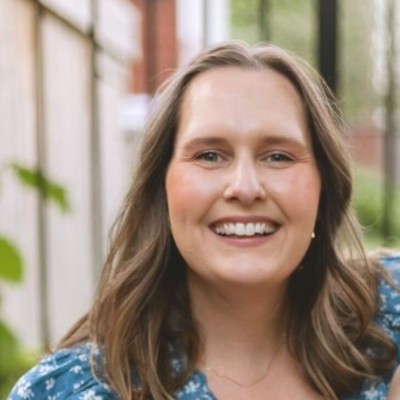
Delaney Monahan recently completed cohort 9 of the Chicago:Blend fellowship, placed with Capitalize VC. Delaney has a background in strategy and operations in healthcare startups, largely around partner networks and revenue growth. She has a Master of Social Work from Boston College and worked in impact investing focused on Chicago’s West Side prior to joining Honor Technology and Strive Health. For more details and to connect directly visit LinkedIn.
Comments